1. Identify the element and its housing together
Start with the equipment or filter-station reference, then record the housing identification and the full element code. Preserve punctuation and suffixes. A purchasing line that names only “hydraulic filter” leaves the supplier guessing which assembly and replacement scope you mean.
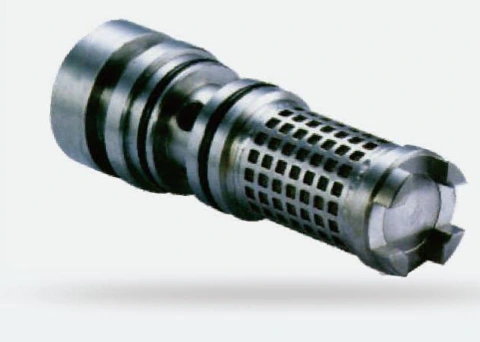
The CHILL catalogue library includes GLF500-01, GLF900-01, GLF900A-01, GLG25-01 and GLGB10.02 filter-element records. These panels provide photographs and labels but no confirmed pressure, flow, material, connection dimensions or operating limits. Use the records to start identification, then request the applicable drawing and data sheet. Do not interpret the digits in a model code as a flow or micron rating.
Reference: GLF500-01 — catalogue identification and missing-data notes · GLF900A-01 — separate catalogue record
2. Define what is being supplied
Ask whether the quotation covers the element alone, an element with specified seals, or a complete filter assembly. Keep the housing and element references in separate fields. Confirm that the proposed item matches the approved interface, rather than treating a similar external shape as proof of compatibility.
Use existing drawings and approved maintenance records wherever possible. Do not ask staff to open installed equipment simply to obtain an inquiry photograph. Any inspection or measurement must follow the site’s authorized isolation and maintenance procedures.
- Housing model and equipment assembly reference.
- Full element code, including suffixes and any superseding reference.
- Drawing revision, overall dimensions and seating or sealing details.
- Specified seals, end fittings and included accessories.
- Quantity and whether the offer is an exact replacement or an alternative requiring review.
3. Put the actual hydraulic medium in the inquiry
Write down the fluid designation used by the equipment, not merely the word “oil.” Where relevant, include the specified concentration and the temperature range from the approved equipment documentation. Ask the supplier to confirm the offered filter medium, seals and construction for that actual service.
Do not copy fluid compatibility from another component on a nearby catalogue page. A valve’s listed medium is not evidence for a filter element. If the required compatibility is absent from the source panel, mark it as awaiting confirmation instead of filling the gap with a general product-family claim.
4. Compare performance evidence, not a micron number alone
Ask for the filtration requirement set by the equipment or responsible technical team, and request the proposed element’s documented performance against it. A quotation should identify the stated particle size, filtration efficiency or beta value where applicable, and the test basis used. This makes differences between offers visible without inventing a universal target for every mining circuit.
HYDAC’s technical explanation describes beta value as a measure of particle-removal efficiency at a specified particle size. This is general terminology, not test evidence for the catalogue elements on this website. No beta ratio, micron grade or contamination-control performance is assigned to GLF500-01 or another CHILL catalogue record by citing that explanation.
Reference: HYDAC — filtration terminology and beta value (general reference)
5. Ask for sizing and pressure-drop review in context
Provide the required flow and operating conditions from the equipment documentation so the supplier and responsible specialist can review the complete filter arrangement. HYDAC’s sizing guidance considers housing and element pressure drop together, including operating and cold-start conditions. The applicable calculation and limits still have to come from the actual proposed filter documentation.
| Review point | Information to request | What not to assume |
|---|---|---|
| Flow and fluid conditions | Required flow, fluid properties and temperature conditions used for sizing | A number embedded in a product code is the approved capacity |
| Housing and element | Documented pressure limits and permissible element differential pressure | Housing pressure rating and element differential-pressure limit are the same |
| Filtration performance | Particle size, efficiency information and test basis appropriate to the requirement | Two equal micron labels establish equal performance |
| Bypass or backflush arrangement | Original assembly configuration and model-specific compatibility confirmation | A replacement element authorizes changes to the circuit arrangement |
Reference: HYDAC — filter sizing and pressure-drop context (general reference)
6. Handle the backflush-station label carefully
One supplied catalogue record is labeled “1000L/min backflush filter-station element” without a separate printed model code. The library retains that label as source evidence, not as an independently confirmed operating rating for the element. Quote the label together with the station reference and source photograph when asking for clarification.
Request the exact replacement identification, applicable station drawing and performance documents. Do not substitute a nominal-looking code or present the label as a guarantee that the element is suitable for every system operating at that flow. A written, configuration-specific response is more useful than a supplier simply repeating the catalogue caption.
Reference: Backflush filter-station element — source label limitations
7. Close the order with an approved document set
Keep the offered element code, housing reference, drawing revision, fluid compatibility response and performance data with the quotation. Record any missing answer as an open exception. Send alternatives to the responsible equipment specialist for review before commercial release.
A filter replacement inquiry should not introduce a new cleanliness target, bypass setting, cleaning method or change interval without the required engineering and maintenance approval. If an element has failed early, attach existing service records and observations; do not diagnose the cause from the photograph alone. The purchasing goal is a traceable, reviewable replacement proposal, not an unsupported promise of longer life.
Frequently asked questions
Does GLF500-01 identify a confirmed flow or filtration rating?
Not from the supplied catalogue panel. It is retained as the printed model label; request a model-specific data sheet rather than interpreting the digits as a performance rating.
Can matching dimensions alone establish a suitable replacement?
No. Confirm the housing interface together with the actual fluid, filtration performance, operating limits and applicable assembly requirements. The responsible specialist must review the proposed item.
Is the 1000L/min label a verified rating for the backflush filter-station element?
The website preserves it as catalogue label text, not an independently confirmed element rating. Request the exact station configuration, replacement identification and supporting technical documents.
Turn the checklist into a clear inquiry.
Use your model, drawing revision and application requirements to start the next discussion.
Browse the full product library Resolve ambiguous catalogue specifications Prepare a complete component RFQ Explore hydraulic products Prepare a technical inquiryGeneral purchasing information, not equipment-specific engineering approval. Installation, pressure settings, substitutions and maintenance require the responsible specialist and the equipment manufacturer’s procedures.
GLF500-01 — catalogue identification and missing-data notes GLF900A-01 — separate catalogue record HYDAC — filtration terminology and beta value (general reference) HYDAC — filter sizing and pressure-drop context (general reference) Backflush filter-station element — source label limitations