
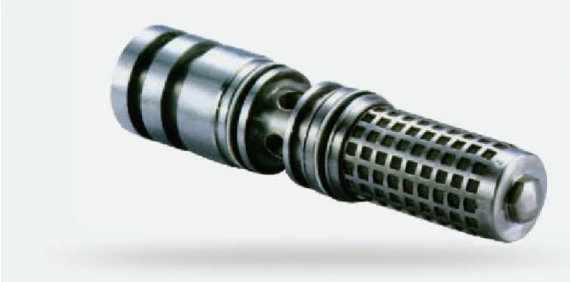
1. Start with the approved order baseline
Before reconciling a delivery, bring together the purchase order line, the final agreed item description and the referenced drawing or specification revision. Use the approved order record, not an earlier quotation or a newly downloaded catalogue page, as the baseline for the receiving comparison.
Record the delivery reference and receipt date separately from the order date. For partial deliveries, retain the quantity expected, the quantity received on this delivery and the remaining balance. Do not silently treat a missing item as a supplier-approved cancellation or change the ordered quantity to make the paperwork agree.
2. Keep three identities in separate fields
Copy what each source actually says. A box label, a packing list and the accessible marking on the item can differ; recording only one combined model field would hide that difference. The following is a suggested receiving worksheet, not a product acceptance standard.
Use the supplier’s batch or serial reference if one is actually supplied. If none is present, record “not provided” rather than generating a manufacturer serial number. An internal receiving reference can link photographs and documents, but should remain clearly identified as your own tracking reference.
| Record | Evidence to retain | Question to close |
|---|---|---|
| Order line | Full approved model, configuration and document revision | What was agreed for this line? |
| Packing list and package | Delivery reference, package label and declared quantity | Which package is assigned to this line? |
| Delivered item | Accessible markings, item count and safe photographs | Does the observed identity agree with the order? |
| Handover status | Open discrepancy, responsible reviewer and decision reference | May this item enter available stock? |
3. Preserve small differences in catalogue codes
The product library has separate GLF900-01 and GLF900A-01 filter-element records. For receiving paperwork, the letter A must not disappear during manual entry or spreadsheet normalization. If the order and delivery show different codes, record the discrepancy and obtain a line-specific explanation; do not decide that the difference is merely a typographical variation.
These catalogue panels provide photographs and labels, not confirmed performance or interface specifications. A matching label closes only an identity observation. It does not establish filtration performance, fluid suitability or approval for the intended housing. Receiving staff should refer technical questions to the responsible reviewer rather than infer ratings from the digits in the model.
Reference: GLF900-01 — separate catalogue model record · GLF900A-01 — exact-reference and source limitations
4. Record configuration differences without diagnosing them
The library also retains two FJQ80/31.5 configurations: a red-handle panel identified as self-locking and a separate black-handle panel whose heading lacks that qualifier. This is a useful reminder that the shared model text alone may not distinguish the ordered configuration. Compare the delivery with the configuration and drawing agreed for the order.
If an accessible feature appears different, describe the observation and attach a photograph. Avoid conclusions such as “equivalent,” “upgraded” or “incorrect internals” without the appropriate evidence. Handle colour in a catalogue photograph is an identification clue, not a standalone acceptance criterion or proof of locking function. Do not operate or dismantle an item to resolve a paperwork question under this checklist.
Reference: FJQ80/31.5 — self-locking catalogue configuration · FJQ80/31.5 — separate black-handle configuration
5. Separate observations, holds and decisions
Keep the observed condition separate from the disposition decision. For example, “package label differs from order line” describes evidence; “held pending identity review” describes status; “accepted under approval reference” describes an authorized decision. The record should identify who supplied each statement and when.
Where packaging damage, missing identification, missing documents or another discrepancy is observed, follow the organization’s receiving and nonconformance procedures. Keep the affected items distinguishable from available stock while review is pending. Do not invent universal damage limits, inspection tolerances or acceptance criteria from this article.
- Link each discrepancy to a specific order line and delivery—not just a general supplier name.
- Retain the original photographs and document versions with the observation date.
- Assign the open question to the appropriate purchasing, quality or engineering reviewer.
- Record the written response and decision reference before changing the status.
- Preserve the earlier observation when the issue is resolved rather than overwriting the history.
6. Complete the stores handover without implying installation approval
The handover should identify the item, quantity, storage reference, relevant document location and current release status. If one delivery contains both released and held items, make that distinction explicit at line-item level. A delivery signature or a count entered into inventory should not be used as shorthand for every technical acceptance decision.
Follow the applicable supplier instructions and site procedures for handling, preservation and storage; this guide does not specify a universal storage life or preservation method. Keep protective packaging and identification associated with the item as required by those instructions. Installation, commissioning and any testing remain separate authorized activities.
For the next maintenance request, the useful result is a traceable path from the stock item back to the approved order and receiving decision. That path is more valuable than a folder of unlabelled photographs or a stock description shortened to “hydraulic valve.”
Frequently asked questions
Does signing for delivery mean a hydraulic spare part is approved for installation?
The receiving record should distinguish physical receipt from technical acceptance and release for use. Follow the organization’s approval process; a delivery signature alone should not be treated as every required technical decision.
What should be recorded when the package label and item marking differ?
Retain both exact references, identify the order line and package, and record the discrepancy for the responsible reviewer. Do not overwrite either reference to make the records appear to match.
Can an internal receiving number replace an absent supplier batch or serial number?
An internal number can link your receiving documents, but it should be labelled as an internal tracking reference. Record an absent supplier batch or serial number as not provided rather than presenting your own number as supplier traceability.
Turn the checklist into a clear inquiry.
Use your model, drawing revision and application requirements to start the next discussion.
Before ordering: a complete hydraulic component RFQ Review a filter-element replacement proposal Browse the hydraulic product library Explore hydraulic products Prepare a technical inquiryGeneral purchasing information, not equipment-specific engineering approval. Installation, pressure settings, substitutions and maintenance require the responsible specialist and the equipment manufacturer’s procedures.